
Bloodhound guide
Bloodhound breed information
The bloodhound is a large, gentle scent hound with one of the keenest noses in the dog world, a long history and a soulful face.
In short: The bloodhound is a large scent hound developed by the monks of St Hubert in medieval France and Belgium. Adults stand roughly 58 to 69 cm tall and weigh about 36 to 50 kg. They are gentle, sociable and sensitive, famous for their sense of smell, and the Kennel Club lists their lifespan as under ten years.
Last updated 23 October 2026
Key terms
- Scent hound
- A dog bred to find and follow a trail by smell rather than by sight or speed.
- Flews
- The hanging upper lips of a bloodhound, which give the face its deep, drooping look.
- Recall
- Coming back when called, which is the hardest thing to teach a scent-driven hound.
- Vulnerable native breed
- A Kennel Club term for British and Irish breeds with low yearly registrations.
What is a bloodhound?
The bloodhound is a large scent hound, famous for its extraordinary sense of smell, its long, soft ears, its loose, wrinkled skin and its solemn, wise expression. It is affectionate, sociable and rather sensitive, and it does best with owners who have patience, space and a sense of humour.
The breed has been described as a “dog attached to a nose”, and anyone who has walked one will understand why. This page sets out the essentials of bloodhound breed information: where the breed comes from, what it looks like, how it behaves, and how long it lives. It is written by Blood Hound Rescue UK, so it also reflects what we see when bloodhounds come into rescue.
History and origin
The bloodhound comes originally from Europe. It was developed in France and Belgium from around the twelfth century by the monks of the Abbey of St Hubert, and for that reason it is sometimes still called the St Hubert Hound. The monks prized these magnificent dogs for their endurance, stamina and intelligence.
During the fourteenth century the breed was renamed from Chien St Hubert to Bloodhound, as it is known today. The name is usually said to recognise the pure bloodlines of these dogs, rather than anything to do with blood.
The first references to bloodhounds in England appear in the history books around the thirteenth century, although the breed may well have arrived earlier. Hounds seen in England at that time are known to be direct descendants of the hounds kept by the monks of St Hubert. Many legends surround the breed, including one that a pack of bloodhounds was used to track Robert the Bruce and William Wallace.
Since then bloodhounds have worked alongside people in many different roles, using their inbuilt talent for tracking over many miles and through all kinds of terrain.
Appearance, size and weight
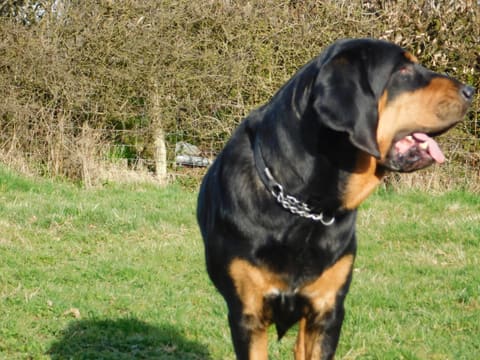
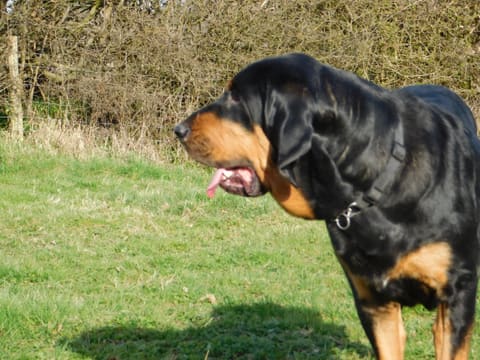
The Kennel Club breed standard describes a noble and dignified dog with a solemn, wise and powerful expression. Long, thin, soft ears hang in folds, the skin of the head and neck is loose and wrinkled, and the jowls (known as flews) hang deeply.
- Height: dogs typically 63 to 69 cm (25 to 27 in); bitches 58 to 63 cm (23 to 25 in)
- Weight: dogs average around 41 kg and can reach 50 kg; bitches average around 36 kg and can reach 45 kg
- Colours: black and tan, liver and tan, and red
- Coat: short and smooth, needing a weekly brush
Remember that these figures are a guide to the ideal. Individual dogs, and bloodhound crosses like some of our rescues, can be larger or smaller.
The famous nose
A bloodhound can follow a scent trail over long distances, and many hours old, with a determination that is hard to match. The breed has been described as having every point of the hounds that hunt together by scent. Bloodhounds have been used for trailing people and for search work for centuries, and they have been described as highly skilled at tracking a person, an animal or even an object.
At home this means that your bloodhound lives by its nose. A walk is a sniffing expedition, a garden fence needs to be secure, and the world will sometimes seem to disappear when a good smell turns up. We cover how to work with this in our bloodhound training and scent work guide, and how to plan a trip in travelling with a bloodhound.
Bloodhound temperament
The breed standard describes the bloodhound as affectionate and not quarrelsome with companions or other dogs, although it can be somewhat reserved and sensitive. In our experience bloodhounds are gentle, sociable, deeply attached to their people and often rather comical.
They can also be stubborn. A bloodhound is a thinking, scent-driven hound rather than an eager-to-please dog, so patient, reward-based training works far better than pressure. They dislike being left alone for long periods and generally prefer to be part of the household. If you would like to know whether that fits your life, read is a bloodhound right for you?
Lifespan and health
Large, deep-chested breeds tend to have shorter lives than small dogs. The Kennel Club lists the bloodhound’s lifespan as under ten years, and many owners say ten years is a good age, so enjoy every year. Good care, a healthy weight and regular check-ups with your vet all help.
Bloodhounds have some health concerns that every owner should know about, including bloat, ear and skin fold problems and joint conditions. We explain them in plain English in our guide to bloodhound health problems, and your vet is always the best person to ask about your own dog.
A breed that needs friends
The Kennel Club lists the bloodhound as a vulnerable native breed, so fewer bloodhound puppies are registered each year than for many other breeds. That is one of the reasons we exist. Blood Hound Rescue UK helps with rescue, rehoming and fostering of bloodhounds in every corner of the UK, and supports owners so that fewer dogs need to be rehomed in the first place.
Frequently asked questions
How big do bloodhounds get?
According to the Kennel Club breed standard, dogs typically stand 63 to 69 cm (25 to 27 inches) at the shoulder and bitches 58 to 63 cm (23 to 25 inches). Adult weights are typically around 36 to 50 kg, so these are large dogs.
What colours are bloodhounds?
The breed standard accepts black and tan, liver and tan, and red. A small amount of white is permitted on the chest, feet and tip of the tail.
Is the bloodhound a rare breed?
The Kennel Club lists the bloodhound as a vulnerable native breed, which means that fewer puppies are registered each year than for many other breeds. It is one reason why rescue and rehoming matter.
More bloodhound guides
Thinking of adopting a bloodhound?
We match every rescue hound with the home that suits them best. You are very welcome to talk it through with us first.