
Before you adopt
Is a bloodhound right for you?
A bloodhound can be a wonderful companion, but this is a big, strong, scent-driven dog with real needs. Here is an honest look before you decide.
In short: A bloodhound suits owners with space, time and patience: a large, secure garden, more than two hours of sniffing exercise a day according to the Kennel Club, tolerance for drool and noise, and someone at home for much of the day. It is not an easy or tidy breed, but for the right household it is a loyal, gentle companion.
Last updated 23 October 2026
The short answer
A bloodhound is right for you if you have space, time, patience and a sense of humour, and if you are happy to live with a dog that follows its nose first and listens second. It is probably not right if you want an easy, tidy, instantly obedient dog, or if the house is empty for most of the day.
Every year we see bloodhounds come into rescue because the reality of owning one was not what people expected. If you are considering owning a bloodhound, we would much rather you read this page, talk to us, and make a well-informed choice.
Space and exercise
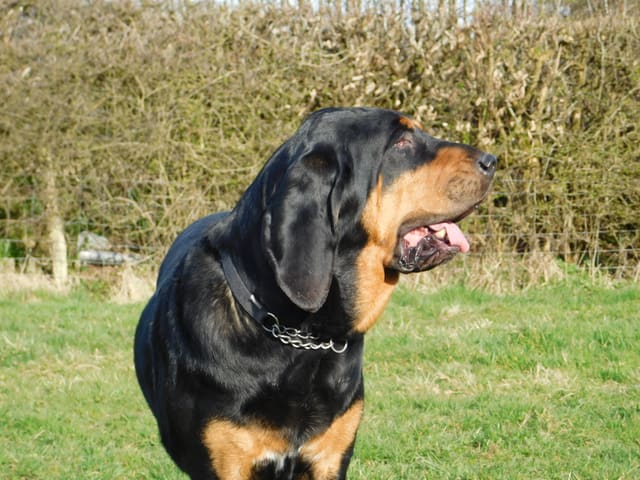
Bloodhounds are large dogs that need room to stretch, turn round and lie down. The Kennel Club suggests that the breed suits a large house with a large garden, and that it is best in the country rather than the town. They also need a lot of exercise: the Kennel Club lists more than two hours a day.
That does not mean two hours of running. Bloodhounds are built for stamina rather than sprinting, and they love a long, sniffy walk where they can follow their noses. A garden that is securely fenced, with fences high enough and gates that close, is essential, because a bloodhound that finds a good scent can be gone before you have noticed.
Drool, noise and mess
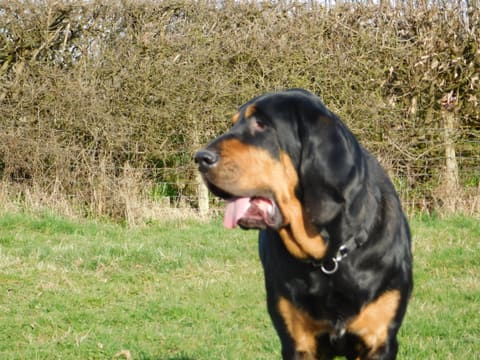
Yes, bloodhounds drool. Heavy jowls and loose skin mean that water, food and slobber end up on the dog, the floor, the walls and sometimes you. Keep a towel handy, expect to wipe the face and folds regularly, and be ready for a shake of the head to spray the room.
Bloodhounds also have a deep voice, which can be loud, and some are enthusiastic howlers. They can also be thorough about checking the kitchen worktops. If all of this makes you smile, you may well be a bloodhound person.
Character: loving, sensitive and stubborn
The breed standard describes the bloodhound as affectionate, not quarrelsome, and somewhat reserved and sensitive. Bloodhounds usually bond closely with their people and can be upset by harsh words or an unsettled home. They also have a stubborn streak: a bloodhound is bred to follow a trail independently, not to wait for instructions. Training takes patience, consistency and plenty of rewards.
Being left alone
Bloodhounds are social dogs and many do not like being left for long periods. A bored or lonely hound can become noisy or destructive. If you work away from home all day, think carefully about dog walkers, day care or flexible arrangements before you adopt. Any dog needs to learn to be alone gradually, so build this up slowly.
Children and other pets
Bloodhounds are generally good-natured with children and other dogs, but they are large and strong. A friendly bounce from an excited adult hound can knock over a toddler. Always supervise, and give the dog a quiet place where they can rest undisturbed.
With other dogs, a bloodhound is usually sociable. Smaller pets such as cats are more of a question mark, as with any hound. When we match a rescue hound with a new home, we talk about the other animals in the household.
The cost of owning a bloodhound
A large dog costs more to keep than a small one. Think about food, insurance, routine and emergency veterinary care, vaccinations and parasite treatment, grooming equipment, boarding or dog-sitting when you are away, and a car large enough to carry a big dog safely. Without quoting figures, it is sensible to budget generously and to plan for a dog that may live for around ten years.
A quick checklist
- I have a secure garden and room for a big dog.
- I can give a bloodhound time for long, slow walks every day.
- I do not mind drool, noise and the occasional smell.
- I have patience for training that moves at the hound’s pace.
- Someone is home for much of the day, or I have a plan for when I am out.
- The whole household has agreed that a bloodhound is a good idea.
If you could tick most of these, a bloodhound may well be the dog for you. If not, that is useful to know too, and we are happy to talk about it.
Talk to us
Nothing replaces a conversation. Our A-Team includes people who have lived with bloodhounds for many years. They will tell you honestly what it is like, and if a bloodhound turns out not to be right for you, we will say so kindly. If it is, we will help you to find the right hound. Read about our rescue dogs and how adoption works on our adopt a bloodhound page.
Frequently asked questions
Can a bloodhound live in a flat?
It is not impossible, but it is not ideal. Bloodhounds are large, active scent hounds that need space to move and a secure outdoor area. The Kennel Club suggests a large house with a large garden suits the breed best.
Are bloodhounds good with children?
Bloodhounds are usually gentle and tolerant, but they are big, strong dogs and can knock over small children by accident. Supervise all time between dogs and children, and teach children to respect the dog’s space.
More bloodhound guides
Thinking of adopting a bloodhound?
We match every rescue hound with the home that suits them best. You are very welcome to talk it through with us first.