Health and care
Bloodhound health problems
Like every breed, the bloodhound has some health concerns. Knowing what they are helps you to spot trouble early and to talk to your vet.
In short: Common bloodhound health concerns include bloat (GDV), ear infections, skin fold irritation, eye problems and hip and elbow dysplasia. Bloat is an emergency, so call your vet at once. This page is general information only: ask your vet about your own dog, and ask any breeder or rescue what health checks have been done.
Last updated 23 October 2026
What should I ask my vet about bloodhound health?
| Concern | What it means | What to ask your vet |
|---|---|---|
| Bloat (GDV) | The stomach swells and may twist. An emergency. | How should I feed my dog, and what are the warning signs? |
| Ear infections | Long ears trap moisture and wax. | Which cleaner is suitable and how often should I use it? |
| Skin folds | Wrinkles can hold moisture and become sore. | How should I clean and dry my dog’s folds? |
| Eyes | Loose lids and deep-set eyes can cause irritation. | Which signs need an appointment? |
| Hips and elbows | Joints may not develop as they should. | What weight and exercise suit my dog, and has testing been done? |
Common concerns, not a diagnosis
Most bloodhounds are robust, happy dogs, but their size, shape and loose skin make them prone to certain problems. This page lists the common bloodhound health problems that owners should be aware of. It is general information only and is not veterinary advice: if you are worried about your own dog, please ask your vet.
The Kennel Club recommends that breeders carry out hip and elbow tests and eye tests, and its Breed Watch scheme highlights points of concern in the breed. When you adopt or buy, ask what health checks have been done and talk through any findings with your vet.
Bloat (GDV): an emergency
Bloat, and its most serious form gastric dilatation and volvulus (GDV), can affect any large, deep-chested dog, and the bloodhound is one of them. The stomach swells with gas and may twist, which can be life-threatening within hours.
Warning signs can include a swollen or hard belly, restlessness, drooling more than usual, retching without bringing anything up, and weakness. If you suspect bloat, contact your vet immediately. Ask your vet about ways to reduce the risk, for example how best to feed your dog and whether any preventive treatment is worth considering.
Ears
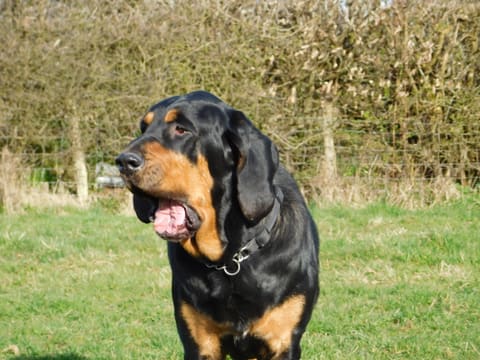
Those long, soft ears are one of the breed’s most loved features, and also a weak point. They hang over the ear canal and can trap moisture and wax, so ear infections are common in bloodhounds. Look out for scratching, head shaking, a smell, redness or a dark discharge.
Check ears regularly, especially after baths, swimming or wet walks, and dry them gently. Ask your vet which ear cleaner is suitable and how often to use it, and do not push anything into the canal.
Skin folds and eyes
The wrinkles on the face and neck can hold moisture, food and dirt. If they are not kept clean and dry they can become sore or infected. Gently wipe the folds as your vet advises, and watch for redness, smell or rubbing.
Bloodhounds can also have loose eyelids and deep-set eyes, and some dogs have eye problems that need a vet’s attention. Watch for redness, discharge, squinting or pawing at the eyes, and seek advice rather than waiting.
Hips, elbows and joints
Hip and elbow dysplasia, where the joints do not develop as they should, are recognised concerns in large breeds including the bloodhound. This is why the Kennel Club suggests hip and elbow testing for breeding dogs. Signs can include stiffness, limping, reluctance to jump or climb stairs, or difficulty getting up.
Keeping your dog at a healthy weight, avoiding over-exercise in puppies and growing dogs, and following your vet’s advice will all help to protect your dog’s joints.
Staying healthy: the basics
- Keep your bloodhound lean: extra weight is hard on joints.
- Feed good-quality food in measured portions, as your vet advises.
- Check ears, folds and eyes every week.
- Keep up with vaccinations, parasite control and check-ups.
- Consider pet insurance early, before problems appear.
For more about daily care see living with a bloodhound, and for how long the breed lives see our breed information.
When to call your vet
Call your vet promptly if your bloodhound has a swollen belly, repeated retching, sudden lameness, a red or painful eye, a head tilt or constant ear scratching, a skin fold that smells or looks sore, or any sudden change in appetite, thirst or energy. You know your dog best. If something seems wrong, trust your instinct and ask.
Older bloodhounds
As bloodhounds get older they may slow down, stiffen and sleep more. Regular senior check-ups, gentle exercise, soft bedding, non-slip floors and a healthy weight make life more comfortable. Your vet can also talk to you about pain relief and joint care, so please do not guess. Our team is also happy to listen if you are worried about an older hound.
Remember that this page offers general information only, and every dog is an individual. Your vet knows your dog and is the right person to advise on diagnosis, treatment and prevention.
Frequently asked questions
What is bloat in dogs?
Bloat, and its more dangerous form gastric dilatation and volvulus (GDV), is when the stomach fills with gas and can twist. It is an emergency in any deep-chested breed, including the bloodhound. If you think your dog has a swollen, hard belly or is retching without being sick, call your vet at once.
Why do bloodhounds get ear infections?
Long, heavy ears can trap moisture and reduce airflow into the ear canal, which makes infections more likely. Regular checks, and advice from your vet about cleaning, can help you spot problems early.
Do bloodhounds need their skin folds cleaned?
Many do. Moisture and dirt can collect in the folds of the face and neck, which may lead to irritation. Ask your vet to show you how to check and care for your own dog’s folds.
More bloodhound guides
Thinking of adopting a bloodhound?
We match every rescue hound with the home that suits them best. You are very welcome to talk it through with us first.