
Travel
Travelling with a bloodhound
Whether it is a trip to the vet or a holiday abroad, a big, drooly hound needs a little extra planning.
In short: Travelling with a bloodhound means a well-fitted crate or crash-tested harness in the car, regular breaks, cool air and a plan for drool. Rules for trains, ferries and flights vary by operator, so check first. Large dogs usually fly in the hold; private charter is another option. Always ask your vet and the carrier before you book.
Last updated 23 October 2026
How do you travel safely with a bloodhound?
For most journeys, travelling with a bloodhound means a well-fitted crate or crash-tested harness in the car, regular breaks, cool air and a plan for drool. For trains, ferries and flights, rules vary by operator and change over time, so always check with the carrier and your vet first. Large dogs usually fly in the hold, and private charter is the other option.
Bloodhounds are big, sensitive, scent-driven dogs, and travel is easier when they are calm and used to their crate. Practise short trips first, and make every journey end somewhere nice.
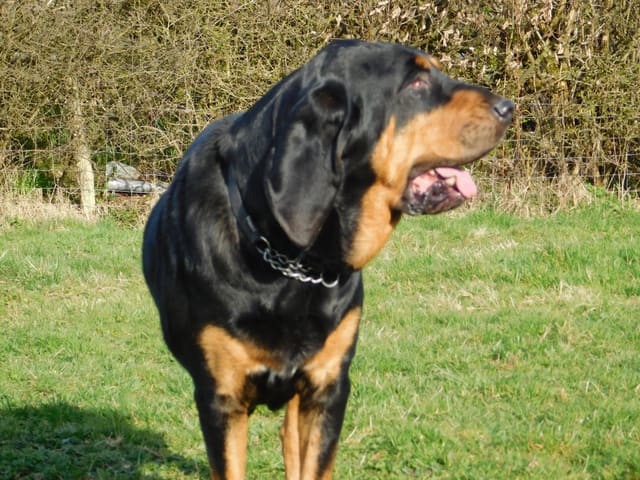
Travelling by car
The Highway Code says that dogs must be suitably restrained in a car so that they cannot distract you or injure themselves or you if you stop quickly. The Kennel Club lists a harness that clips into a seatbelt, a travel crate on the back seat or in the boot, or a dog guard as options. A bloodhound needs room to stand, turn round and lie down, so choose a crate or car size to match, and never let a dog ride in the front passenger seat.
- Breaks: stop often on long journeys for a walk, a toilet break and a drink.
- Heat: keep the car cool and well ventilated, and never leave your dog alone in a parked car.
- Drool: line the crate or seat with a washable cover or towel, and carry spares.
- Travel sickness: a lighter meal a couple of hours before, cool air and a quiet car all help. If your dog is regularly sick, ask your vet.
Trains and ferries
Many train and ferry operators allow dogs, but conditions differ: some limit the number of dogs, require a lead or a muzzle in some areas, or restrict where dogs may travel on board. On ferries your dog may need to stay in the vehicle, or in a kennel on board. Rules vary by operator and route, so check before you book rather than on the day.
A big dog on public transport also needs a settled temperament. Practise on short local journeys first.
Can a bloodhound fly?
Yes, but it is a decision to make carefully, with your vet. Large breeds such as the bloodhound are too big for the cabin of most scheduled flights, so they generally travel in the hold through an airline’s pet or cargo service, in an approved crate that meets the airline’s size and construction rules. Airlines set their own limits on size, weight and temperature, and some restrict certain breeds or refuse to carry animals in very hot or very cold weather. The rules differ by airline, route and season.
For a bloodhound the main concerns are heat, stress and the length of time in the crate rather than the shape of the nose. Always ask your vet whether your dog is fit to fly, give the crate plenty of time to become familiar, and check exactly what the airline will accept before you book. No one can promise that a particular flight will suit a particular dog.
Private jet and charter travel for large dogs
Another option for large dogs is private charter, where the dog may be able to travel in the cabin with the owner, depending on the operator and aircraft. This is a specialist service, and availability depends on the operator and the dog. Our sister website has a guide: Pet Friendly Flights: flying with large dogs. Please talk to your vet and the operator before making any plans.
Taking your bloodhound abroad
Pet travel rules between Great Britain and other countries change from time to time, and they may include microchipping, rabies vaccination, a health certificate and other checks. Check the current rules before you book, on the official GOV.UK page Taking your pet abroad, and ask your vet about the paperwork and timing.
Before any trip
- Book a vet check and ask whether your dog is fit to travel.
- Make sure the microchip details and the tag on the collar are up to date.
- Get a well-fitted crate and let your dog get used to it well in advance.
- Pack water, a bowl, bags, towels, any medication and your dog’s usual food.
- Plan for heat and for breaks, and check the rules of every carrier.
Living with a bloodhound at home? See living with a bloodhound, and for the breed’s needs see our bloodhound breed information.
Frequently asked questions
Can a bloodhound fly?
Yes, in principle, but it takes planning. Large dogs such as bloodhounds usually travel in the hold of a commercial flight through an airline’s pet service, or by private charter where the dog may travel in the cabin. Rules depend on the airline or operator and on your dog’s size, so check with the carrier and your vet before you book.
Is it safe to leave a bloodhound in a parked car?
No. Cars heat up quickly, even on mild days, and a heavy-coated, deep-chested dog can suffer badly. Never leave a dog alone in a parked car.
Do I need a crate to travel with a bloodhound?
A properly fitted crate or a crash-tested harness is the safest way to travel in a car, and a crate is normally required for flights. The Highway Code says dogs must be suitably restrained in a car.
More bloodhound guides
Thinking of adopting a bloodhound?
We match every rescue hound with the home that suits them best. You are very welcome to talk it through with us first.