
Training
Bloodhound training and scent work
The key to bloodhound training is to work with the nose, not against it: reward-based, patient and full of sniffing.
In short: Train a bloodhound with patient, reward-based methods in short sessions. They are intelligent but scent-driven and independent, so recall is the hardest lesson: use a secure garden, a long line and plenty of rewards, and give your hound scent games such as hide-and-seek with treats to use its nose.
Last updated 23 October 2026
Start with the right mindset
Bloodhound training is about patience. This is a breed developed to follow a scent trail independently over long distances, so it is not bred to hang on your every word. The good news is that bloodhounds are intelligent, affectionate and motivated by food and by pleasing their people, as long as the training feels like fun.
Use positive, reward-based methods. Harsh corrections do not suit a sensitive breed and can damage the trust between you and your dog. Keep sessions short, finish on a success, and be consistent: everyone in the household should use the same words and rules.
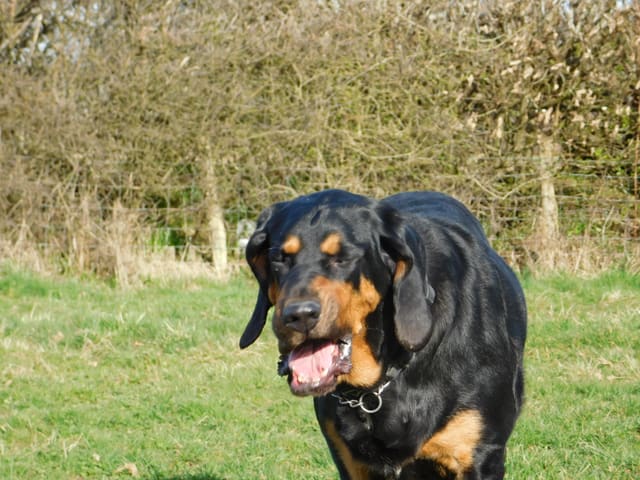
The basics to teach first
- Name and eye contact: reward every time your dog looks at you.
- Sit, down and wait: useful manners for a large dog at doors and in the car.
- Loose-lead walking: a strong hound on a tight lead is hard work, so teach this early with a well-fitted harness or collar as advised by a trainer.
- Leave it and drop it: a nose that investigates everything needs a reliable way to stop.
- Settle on a bed: a calm, relaxed dog in the house is a gift.
A local positive-reinforcement trainer or a puppy and adult class can help enormously, especially if you have not owned a hound before.
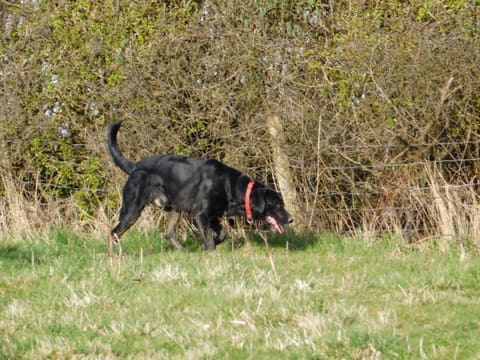
Recall, secure gardens and long lines
Recall is the big challenge. A bloodhound on a scent may genuinely not hear you, and it can cover a lot of ground quickly. Be realistic about it.
- Make sure the garden is fully fenced, with gates that latch.
- Use a long line in open spaces while you build recall, and reward every return generously.
- Only let your dog off the lead in a fully enclosed area until you are certain.
- Check that your dog wears a collar with an identity tag, and that microchip details are up to date.
Scent games to try at home
Giving your bloodhound a job to do with its nose is the best way to tire out its brain, and it makes training much easier. These games need nothing special.
Hide and seek with treats
Let your dog watch you drop a few treats in the grass, then say “find it”. Build up to hiding them where the dog cannot see.
Snuffle mat or scattered meals
Scatter part of the daily food in the garden or in a snuffle mat, so that mealtimes become a sniffing hunt.
Find the person
Ask a family member to hide, with a toy or treat, while someone holds the dog. Release your dog with “find” and celebrate the discovery.
Trailing
Once your dog loves the game, lay a short trail and make it longer over time. Many areas have scent work classes if you want to take it further.
Walks that suit a hound
Let your bloodhound sniff. A twenty-minute sniff on a quiet route can be more tiring and satisfying than a faster, shorter march. Vary your routes, avoid hot weather and take it slowly with puppies and young dogs whose joints are still growing. For more on routine see living with a bloodhound.
Common mistakes to avoid
- Expecting instant obedience. Progress with a hound is steady rather than sudden.
- Long, repetitive sessions. Five minutes, several times a day, beats one long session.
- Calling your dog when you are cross. Recall should always be a good thing.
- Skipping socialisation. Introduce puppies and new dogs gently to people, other dogs, traffic and new places, always at their pace.
- Using the lead to haul. Teaching loose-lead walking takes time, and a hound pulling against you is usually just following a smell.
Asking for help
If you are struggling, ask for help early. A positive-reinforcement trainer, or a knowledgeable bloodhound owner, can often spot a simple fix. Our team is also happy to share what has worked for rescue hounds in our care. Get in touch at any time.
Frequently asked questions
Are bloodhounds hard to train?
They are intelligent, but they are scent-driven and independent, so they can be slower to train than breeds that are keen to please. Patience, short sessions and rewards that your dog really loves make a big difference.
Can a bloodhound be let off the lead?
Many owners find that recall is the hardest thing to teach a bloodhound, because a good smell can override everything else. Use a long line and a secure area while you build reliability, and never assume an off-lead bloodhound will come back.
More bloodhound guides
Thinking of adopting a bloodhound?
We match every rescue hound with the home that suits them best. You are very welcome to talk it through with us first.